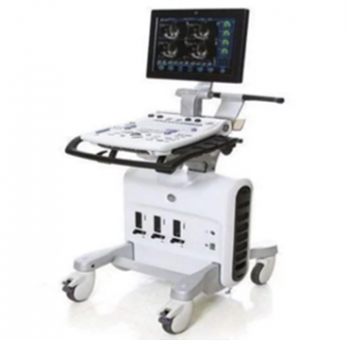
An echocardiogram, or "echo", is a type of scan used to look at the heart and nearby blood vessels. It's also a type of ultrasound scan, which means a small probe is used to send out high-frequency sound waves that create echoes when they bounce off different parts of the body. The picture and information produced by an echocardiogram is more detailed than a standard x-ray image.
An echocardiogram provides speedy diagnoses and is more convenient for both medical practitioners and the patient because of the high-quality imaging it provides as compared to standard x-ray machines. In addition, the echocardiogram machine can be moved quickly from room to room. This enables doctors to evaluate patients thoroughly and make timely diagnoses and overall, there is less waiting time for patients compared to other machines.
Because of this, echocardiograms are also ideal during patient emergencies – whether at the emergency room or in an intensive care unit (ICU) – as they eliminate the need to move at-risk patients.
Number
of Units: